[ 14:07 Friday 12 September 2025 – Train from Fes to Nadoor, Morocco ]
Four hours into a six hour train journey across Morocco, from the ancient capital of Fes to Nadoor on the Mediterranean coast. Alex and I are nestled in a six-person compartment which looks like it dates from the 1990s. The deeply upholstered velvet seats are patterned in gaudy swirls of cerise and blue, which hurt your eyes if you stare at them too long.
Other than us the only occupants of the compartment are two Moroccan gentlemen, both currently snoozing. The one on the left is slender with a neatly-trimmed beard, a button-up shirt in blue and white stripes and a smart white cap. The one on the right is plumper, with a stripy shirt that tends to ride up over his belly. An hour into the journey he shucked his loafers, revealing a row of warped and yellowed toenails. Both of them have proven easy and friendly companions for the journey.
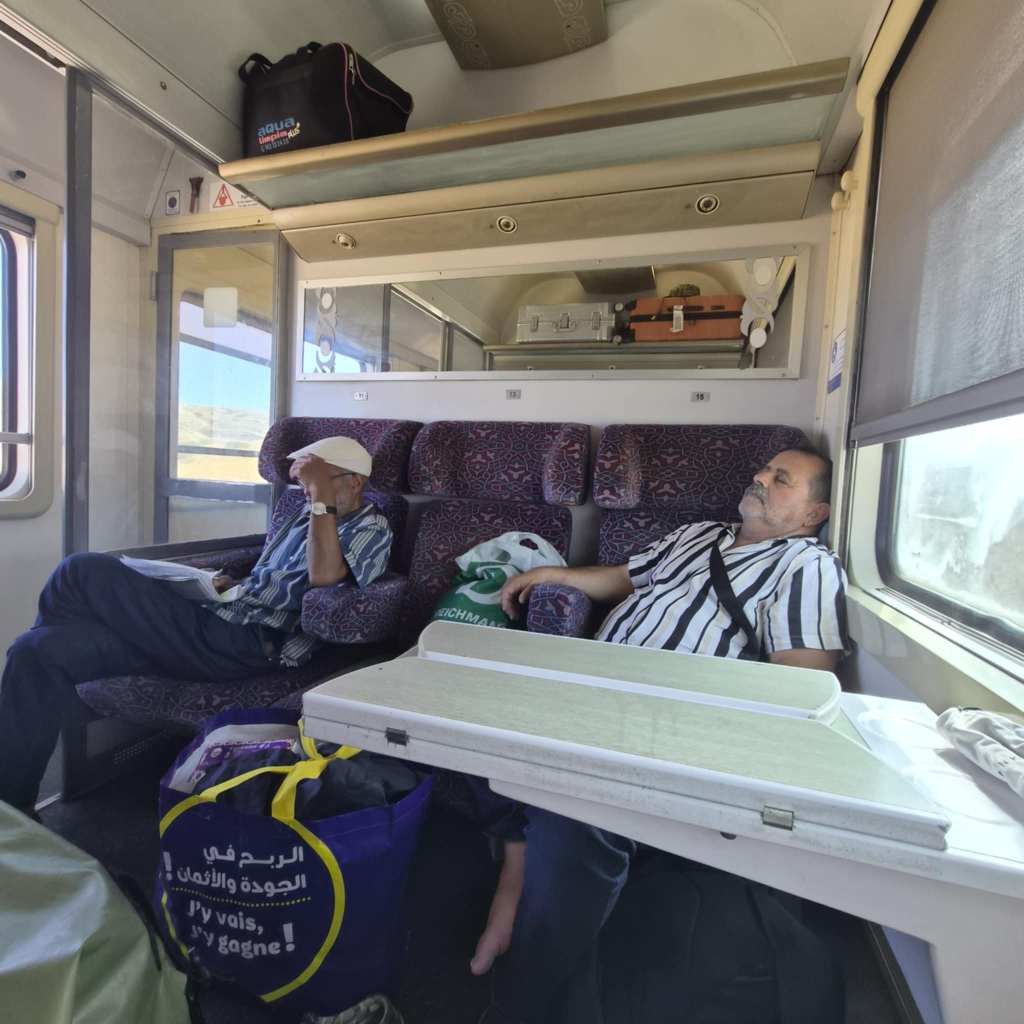
I adore long train journeys. There’s a sense of time stretching along the metallic lines of the track. Outside one senses gradual changes in the landscape and begins to observe common architectural patterns in the passing settlements. Inside one can rely on an improbable combination of people, thrown together by the coincidence of the common journey. The extended contact gives rise to a sense of intimacy, as people’s personalities reveal themselves through the inevitable succession of minor tribulations. Alex doesn’t particularly share my delight in long train journeys, however it’s my birthday in a couple of days so I’m being indulged.
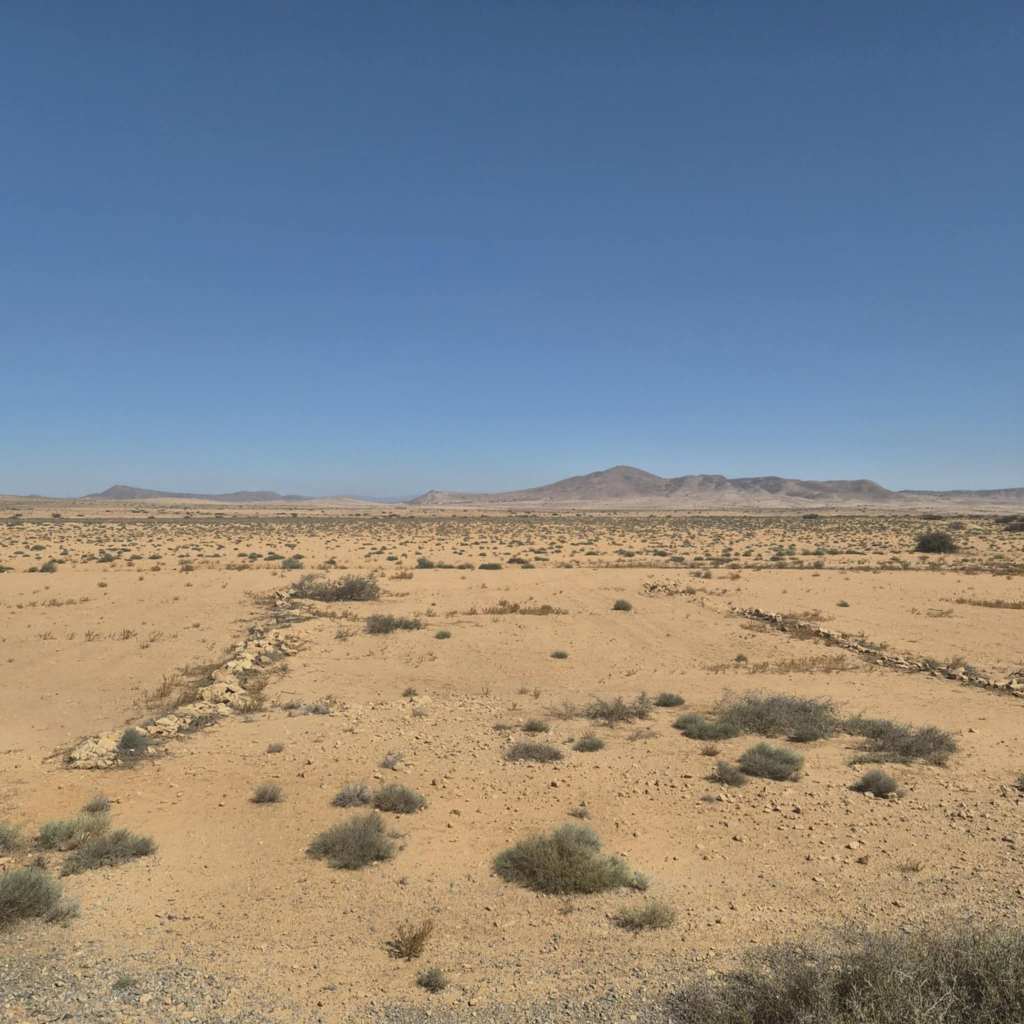
Much of the passing landscape resembles the area of Andalucia where we live. Long passages of bare semi-desert plains are speckled with coarse shrubs, with lilac mountains rising hazy in the distance. These desert stretches are punctuated with verdant oases, swaying with lush bamboo and palms. The sparse villages are thrown together with angular two-storey concrete dwellings; painted burgundy, beige and white. Larger villages include a mosque with a uniformly square, white tower. Occasionally a single-storey mud brick house remains from an earlier century, standing surprised at the fact of its survival.
On arrival in Nadoor we’ll take a taxi to the heavily fortified border with the Spanish enclave of Melilla. Assuming we make it through, we’ll stay in Melilla overnight then take a ship tomorrow afternoon for the six hour crossing to Almeria. After that it’s a forty minute taxi ride back to our house. It would have been quicker to fly from Fes to Malaga then drive from there, but I’ve been longing to do the trip this way ever since we arrived in Rodalquilar.
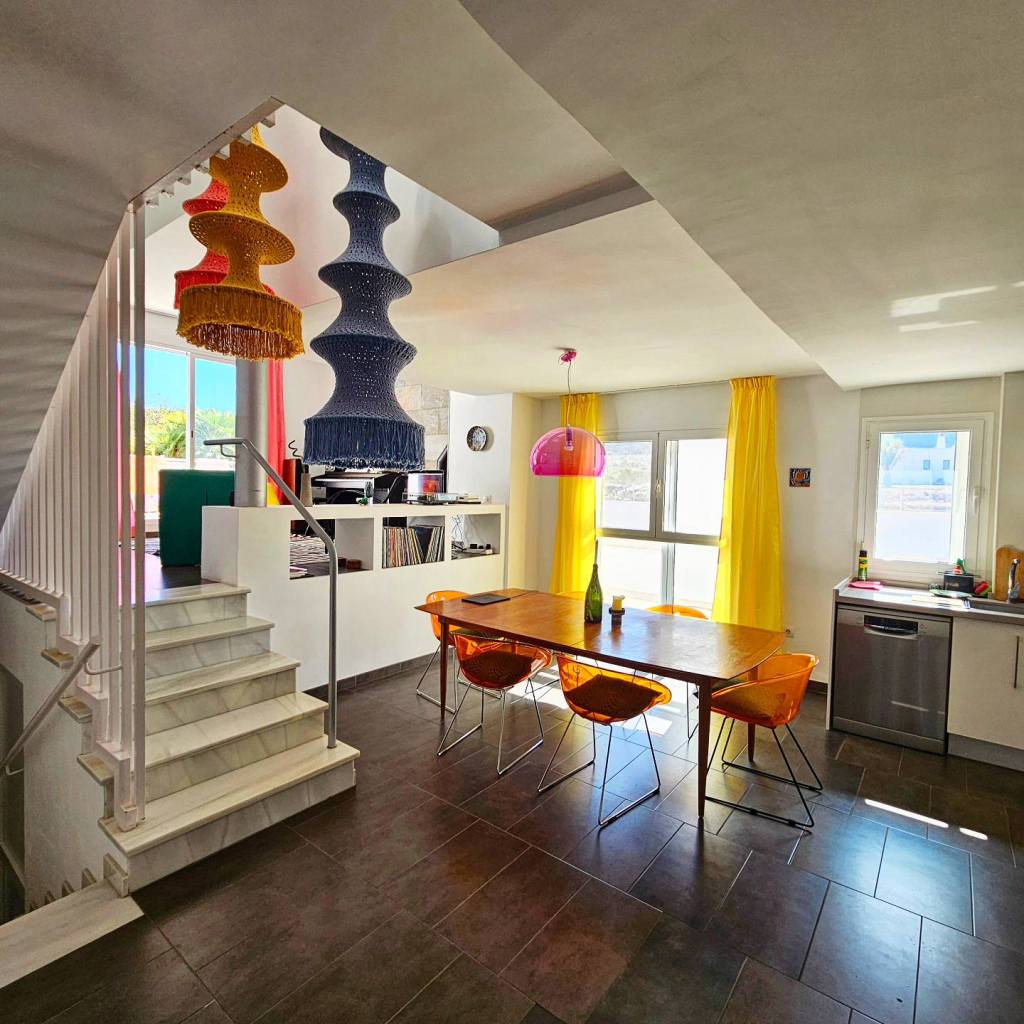
Amongst other things, yesterday marked the second anniversary of moving into the house, which has been a source of great joy for Alex and me. We’ve spent roughly half of our time there, spread evenly throughout the year, with the other half mostly on the boat in London. We’ve already made some changes. We demolished some interior walls to open the kitchen, dining room and raised sitting room into a single living space.
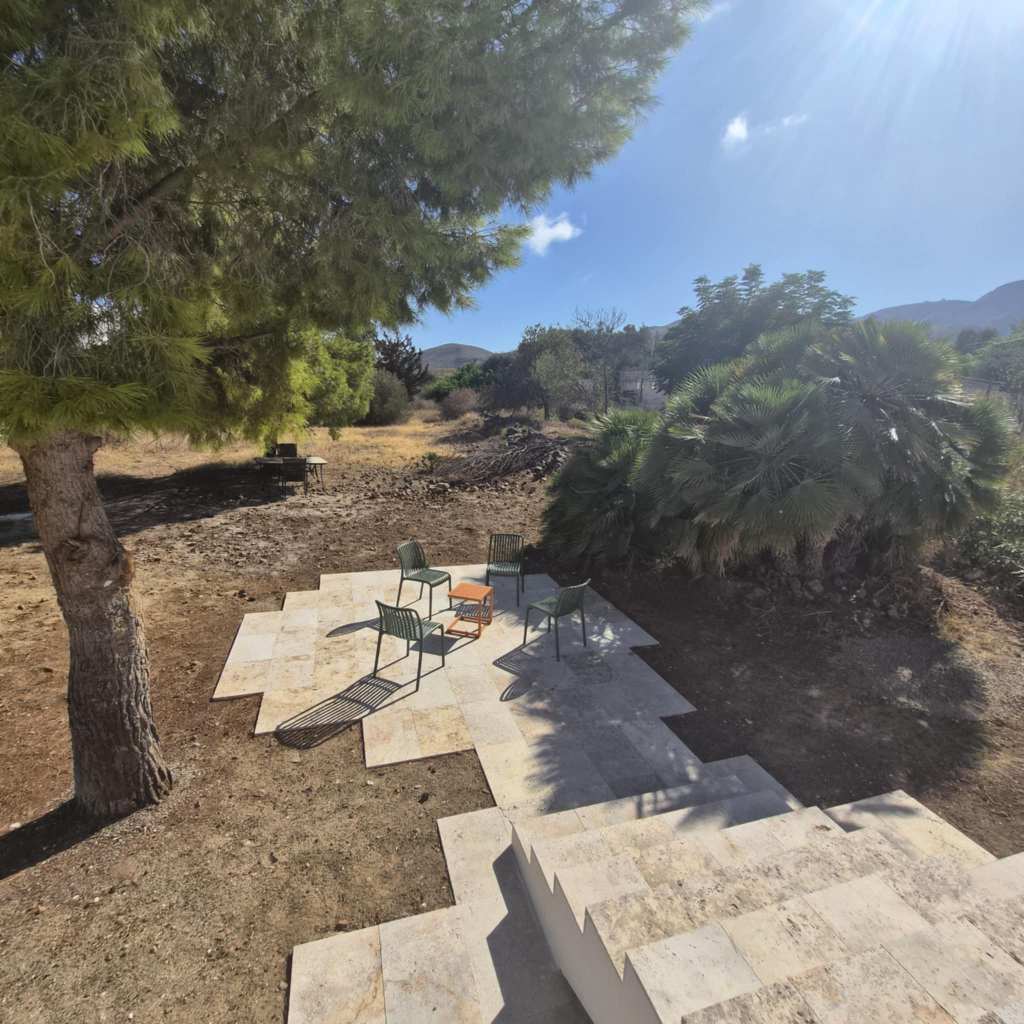
Outside we’ve just completed a three-month series of works to increase the height of the perimeter walls, demolish a boundary wall separating the house from the garden, construct a wide flight of steps descending from the raised terrace into the garden and lay a new terrace in the garden. For the surface of the terrace we discovered a beautiful marble called “Travertino Millares” which is cut in a quarry forty minutes away. It’s a heavily-textured stone with a pale cream background, veins in orange and brown, and occasional pockets lined with minute quartz crystals.
When we bought the house we were able to nab plots of open land on either side, plus an elongated field on the southern side. The field was completely overgrown, with wild asparagus particularly prevelant. This sounds charming (the fresh shoots are delicious) but left unchecked, wild asparagus swiftly becomes an impenetrable tangle of waist-high bushes, covered with vicious thorns, which cling and scratch at anything that passes.
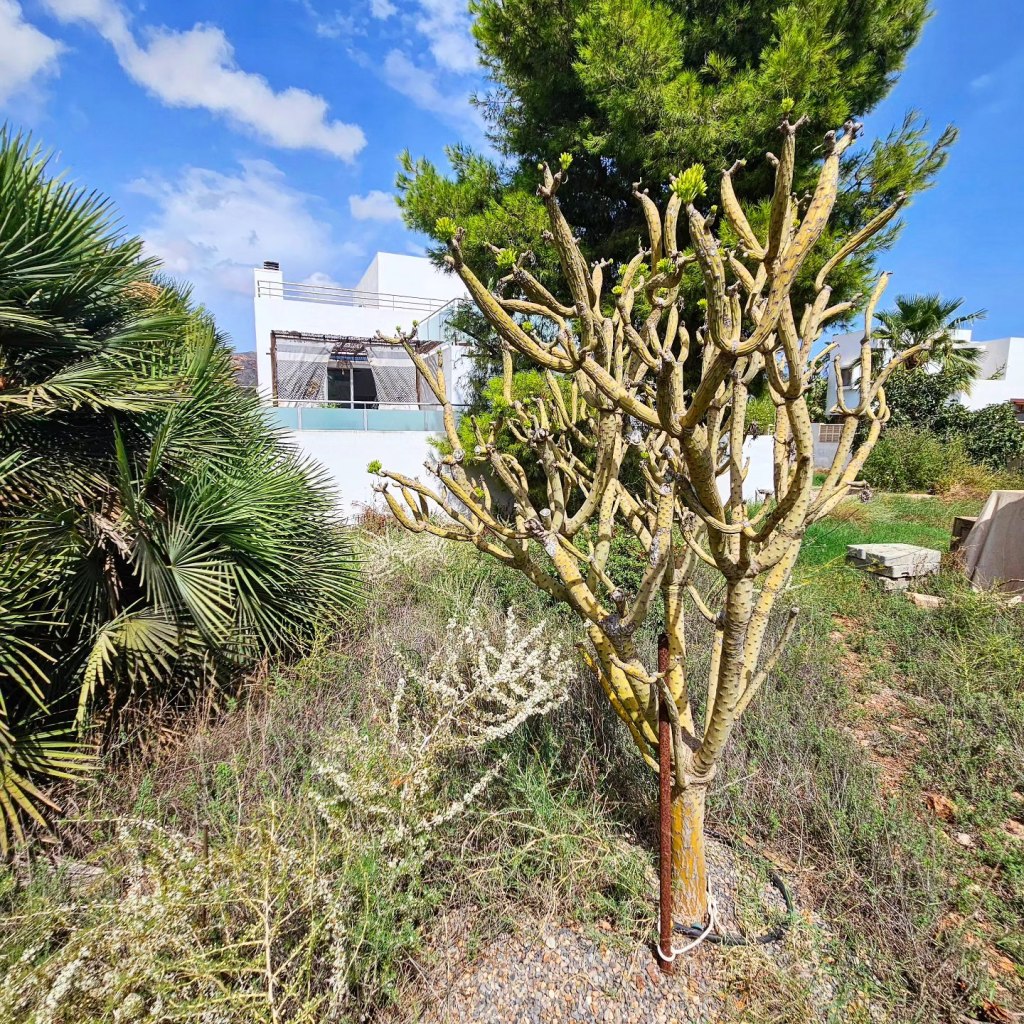
Rising above the asparagus are four mature pine trees, rare in an area with little ground water, half a dozen self-seeded olive trees and a couple of wizened almond trees. Beneath the asparagus, the ground is dotted with patches of wild lavender, which emit a heady perfume when trodden. An old stone wall runs down one side of the field. In the past it was thick with chumbas (prickly pears), now all that’s left is a dark-coloured layer of their rotted remains, presumably laid low by the cochineal beetles which ravaged Spain in the 2010s.
For the first year the scale of the task to tame this jungle was too intimidating and I did my best to ignore it. Last September I plucked up courage to start battling it. Armed with an electric brush cutter, I set about clearing the wild asparagus bushes. At first I was dismayed to find that after hacking down each bush, a week later it would grow right back to the same height, more vigorous and thorny than ever, like a herbaceous zombie. However after chopping them down for a third time, they returned no more. The entire field was too much to contemplate, so I set a demarcation line about a third of the way down from the house, and ignored everything beyond it. Gradually a mountain of chopped thorn bushes piled up beside the house. Once the asparagus was done I cleared all the dead chumbas from the wall, cut the dead branches from the trees and also cut down several of the olive trees.
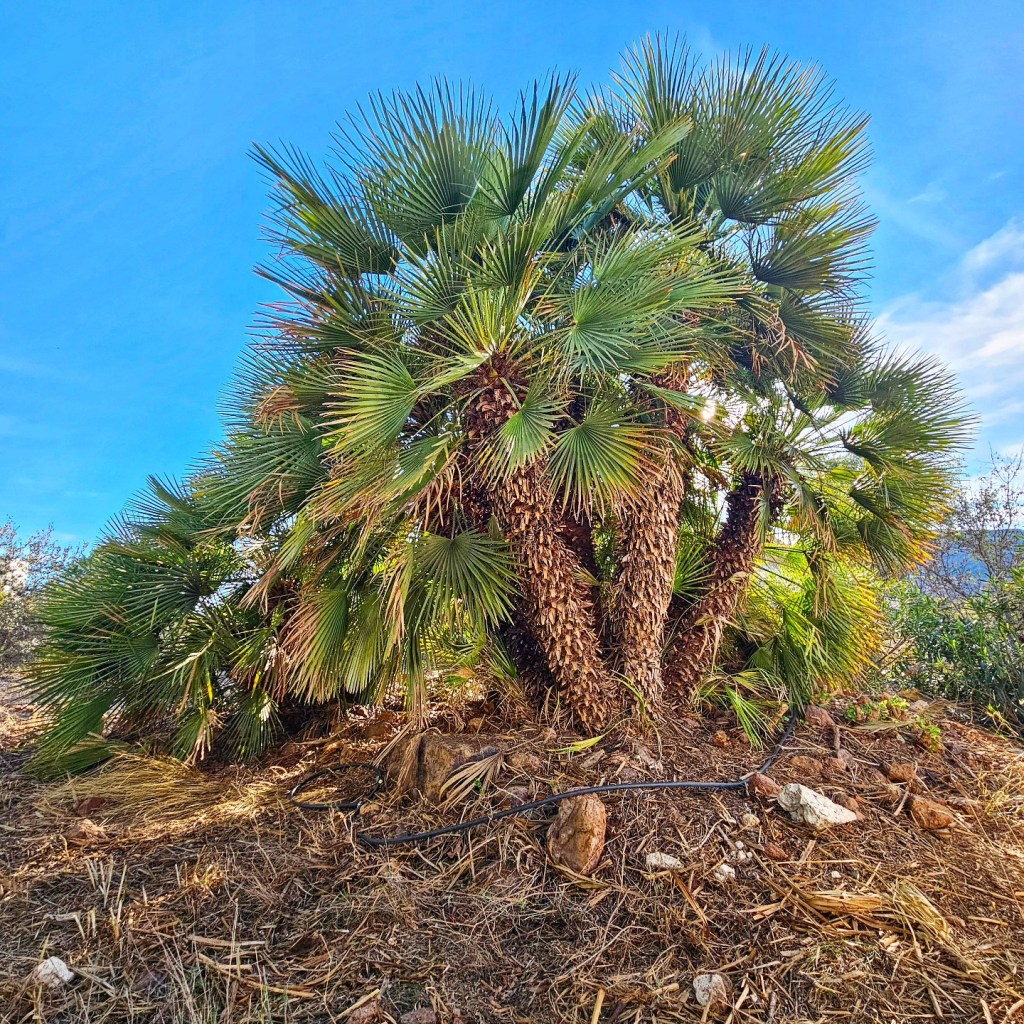
Aside from the plants already noted, there’s one more, which is the undisputed star. Standing immediately behind the house is an ancient cluster of fan palms. These are indigenous to Cabo de Gata and have been adopted as the area’s emblem. Our cluster is a particularly magnificent specimen, with twenty trunks, the tallest growing to three metres. From what I know of their growth rate, it must have been here for a century or more.
As fan palms grow, each year the top of the trunk sprouts new stems, armed with a row of long and extremely sharp thorns on either side, and the distinctive fan of green fronds at its end. Meanwhile the older stems, further down the trunk, gradually wither and die. The dead stems don’t fall off the tree, instead they fold themselves vertically downward, building up layer upon layer of dead, thorn-covered stems and leaves around the trunk.
The fan palm in our field had never been pruned so it was completely choked with dead stems. Every square millimetre of space between the twenty trunks was filled with dead stems, woven together in a solid thorny lattice, choked with dust and insects. I’m not sure what masochistic impulse seized me, but one day I decided the dead stems must go. Armed with my grandmother’s secateurs, elbow-length leather gauntlets and eye-protection goggles I started clipping off the dead stems one by one where they met the trunk.
It was horrendous. Each day I could do no more than half an hour at the task, after which I would emerge with blood dripping from my arms and legs where the thorns had slashed me, and my body covered in filth. But gradually I made headway. By the end of the year the job was done and a second mountain of dead fan palm stems had risen beside the wild asparagus. I didn’t count, but I guess there must have been more than ten thousand dead stems in the pile at the end. The fan palm looked magnificent.
Since moving in, Alex and I have gradually built up a pattern of habits around the rhythm of our work, the landscape and the passing seasons. In the winter we spend the days working on our laptops in the sitting room, with all the doors and windows open to air the house. Towards the end of the afternoon we close the windows and light the wood-burning stove, the only form of heating the house requires. On sunny days throughout the winter I cycle to the beach in the early afternoon and swim before returning and continuing my work.
In the summer the routine is reversed. We keep all the windows open overnight to fill the house with cool air. Then in the morning we close the windows and work in the sitting room with a ceiling fan to circulate the air. When we finish work around six in the evening we cycle to the beach and swim as the sun sets. At the weekends we hike in the mountains or drive to one of a dozen wild coves along the coast.

A couple of months ago, on the fourteenth of July, i woke abruptly to the sound of deep rumbling. My foggy brain said “thunderstorm” but then I realised the room was shaking. I sprang out of bed and ran to the dining room where glasses and plates were rattling in the cupboards. After six or seven seconds the shaking subsided and everything was still.
From across the valley came the barking of perturbed dogs. I checked my phone, which confirmed there’s been an earthquake measuring 5.5 on the richter scale. It’s epicentre was off the coast, just fifteen kilometres from the house. I walked around the house inspecting windows, walls and floors but there was no sign of damage.
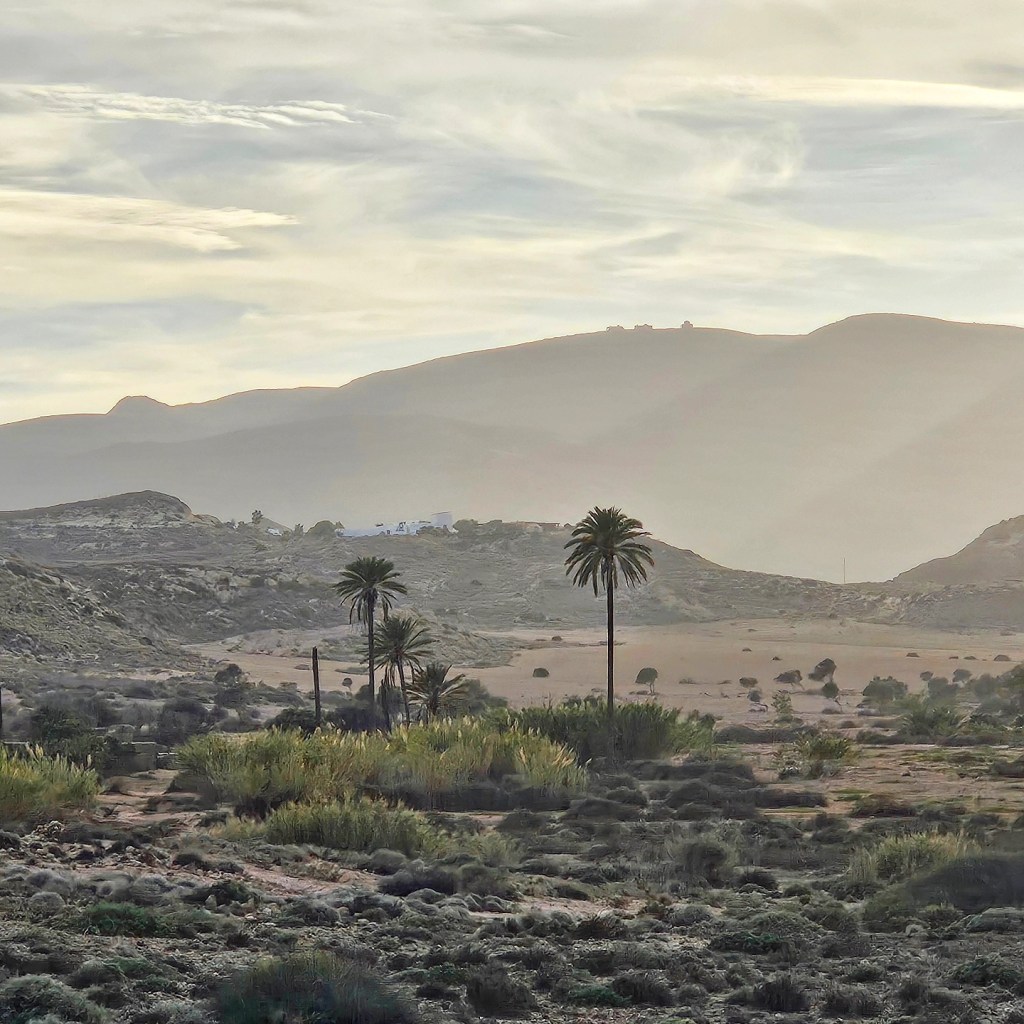
The section of Andalucia where we live is on the junction of the African and European plates, which are compressing at a rate of four millimetres each year. The distinctive landscape of the Cabo de Gata nature reserve was created by a cluster of volcanos thrown up by the fault, ten million years ago. By the standards of Spanish seismology, this is quite a lively area. However there hasn’t been a tremor of this strength for seventy years. The last earthquake that did any real damage was in the sixteenth century.
Gradually we are making friends in Rodalquilar and the surrounding villages. Since the 1980s the area has attracted a steady trickle of artists, progressives and bohemians from across Spain, and to a lesser extent from further afield, drawn by the wild arid landscape and the clear light.
By now my Spanish is functional if grammatically disastrous. As a former teacher, Alex is not impressed.
: c :
 // charles armstrong //